
Let’s be real for a second. If you’ve ever worked on a website long enough, you’ve probably had that one page. The page you know is good. You spent time on it. You rewrote it. You checked everything. And still, it just sits there doing nothing.
That’s the moment people start spiraling. Maybe it needs more words. Maybe the keyword is wrong. Maybe Google just hates the site.
Most of the time, though, the problem is much simpler and much more annoying. The on-page SEO audit didn’t actually look at the page the way a real person or Google does. It looked correct. It didn’t look honest. And that gap is where rankings get stuck.
Ever feel like Google is unsure about your page?
That hesitation usually starts inside the on-page SEO audit.
Why On-Page SEO Audits Feel Like You’re Doing a Lot but Getting Nothing
Most audits aren’t bad. They’re just shallow. They check things that are easy to check. Titles. Headings. Keyword mentions. Tool scores. All of that feels safe because it’s measurable.
What they don’t do is sit with the page and ask, “If I landed here, would I trust this?”
A real on-page SEO audit isn’t comfortable. It forces you to admit things like:
- This page is technically fine, but confusing.
- This content answers the keyword, not the question.
- This page feels like it’s trying too hard.
Most audits avoid those thoughts. And that’s why nothing changes.
Learn more about how on-page works, keach’s on-page SEO services are perfectly crafted for users like you.
Mistake 1: Believing Tools More Than Your Own Brain
Tools are helpful. Nobody’s denying that. But one of the biggest on-page SEO audit mistakes is letting tools decide what matters. If a tool flags something, people rush to fix it, even when the page gets worse.
- More keywords.
- More headings.
- More “optimization.”
Meanwhile, the page starts sounding less like a person and more like homework. Google doesn’t care if your SEO tool is happy. It cares whether people understand your page without effort. If a fix makes the page harder to read, it’s not helping, even if the report looks better.
Mistake 2: Forgetting That Someone Is Tired, Busy, or Confused
This one hurts rankings more than people realize. Someone searching for an on-page SEO audit checklist isn’t relaxed. They’re usually overwhelmed. Something isn’t working, and they want clarity.
If your page dances around the topic, uses vague advice, or feels like it’s building up to a pitch, people feel it instantly. They scroll fast. They skim. They leave. That reaction is one of the most common on-page SEO errors, and it has nothing to do with keywords. It has everything to do with trust.
Mistake 3: Trying So Hard to “Optimize” That the Page Loses Its Voice
You can almost hear it when content has been over-optimized.
- The same phrase keeps showing up.
- Sentences feel stiff.
- Everything sounds slightly unnatural.
This usually happens when an on-page SEO audit checklist becomes a script instead of a guide. Ironically, pages that explain things clearly tend to include keywords naturally anyway.
When content sounds like a person explaining something they understand, Google usually responds better than when it sounds engineered.
Want to enhance your content or simply get information on how content is optimized? Explore our Content Marketing Services.
Mistake 4: Not Paying Attention to How the Page Feels
This is subtle, but it matters.
Some pages are just tiring to read. Long paragraphs. No breathing room. Important points are hidden halfway down. You don’t consciously think “this is bad,” you just feel like leaving.
Many audits never consider this. They check what’s written, not how it feels to move through it. These are quite on-page SEO audit mistakes, but they add friction. And friction kills momentum.
Mistake 5: Treating Internal Links Like a Checkbox
Internal links often get slapped on at the end. “Add a few links, and we’re done.”
But internal links do a lot more than that. They show Google that your site actually understands its own topic. They help pages feel supported instead of lonely.
Weak internal linking is one of the most common on-page SEO errors, especially on sites that grew without a clear plan. A real on-page SEO audit looks at whether pages feel connected in a way that makes sense. Understanding why links matter for your site’s authority is an important part of that picture.
Do your pages feel like they’re standing alone?
Keach Agency helps content work together naturally.
Mistake 6: Looking at Pages Without Looking at Patterns
Google doesn’t see your site the way you do. It doesn’t see “this page” and “that page.” It sees patterns.
If multiple pages are saying similar things, targeting similar ideas, or answering similar questions, Google hesitates. It doesn’t know which one to trust most.
A proper on-page SEO audit steps back and asks whether every page has a clear reason to exist. When pages compete quietly, rankings stay average, no matter how good the content is.
Mistake 7: Acting Like Experience Doesn’t Matter
If a page loads slowly, jumps around, or feels awkward on a phone, people get annoyed. They don’t analyze it. They just leave.
Some audits still treat this as a technical side issue. It’s not. It’s part of how trust is built. A complete on-page SEO audit checklist connects experience with credibility. Good content can’t fully make up for frustration. This is also why page experience signals like Core Web Vitals are now a direct ranking factor.
The best way to strengthen your online presence is through knowledge, and our Digital Marketing Services are just the right guide.
Mistake 8: Using the Same Rules Everywhere
Checklists feel comforting because they’re predictable. But SEO doesn’t work the same way across every niche or search.
Different people want different things. Some want depth. Some want speed. Some want reassurance that they’re not messing everything up.
Using the same on-page SEO audit checklist everywhere often leads to fixing surface stuff while missing what actually matters. Context beats rules every time.
What a Real On-Page SEO Audit Actually Feels Like
A good audit doesn’t overwhelm you. It clears things up. You finally understand why something isn’t working and what needs attention first.
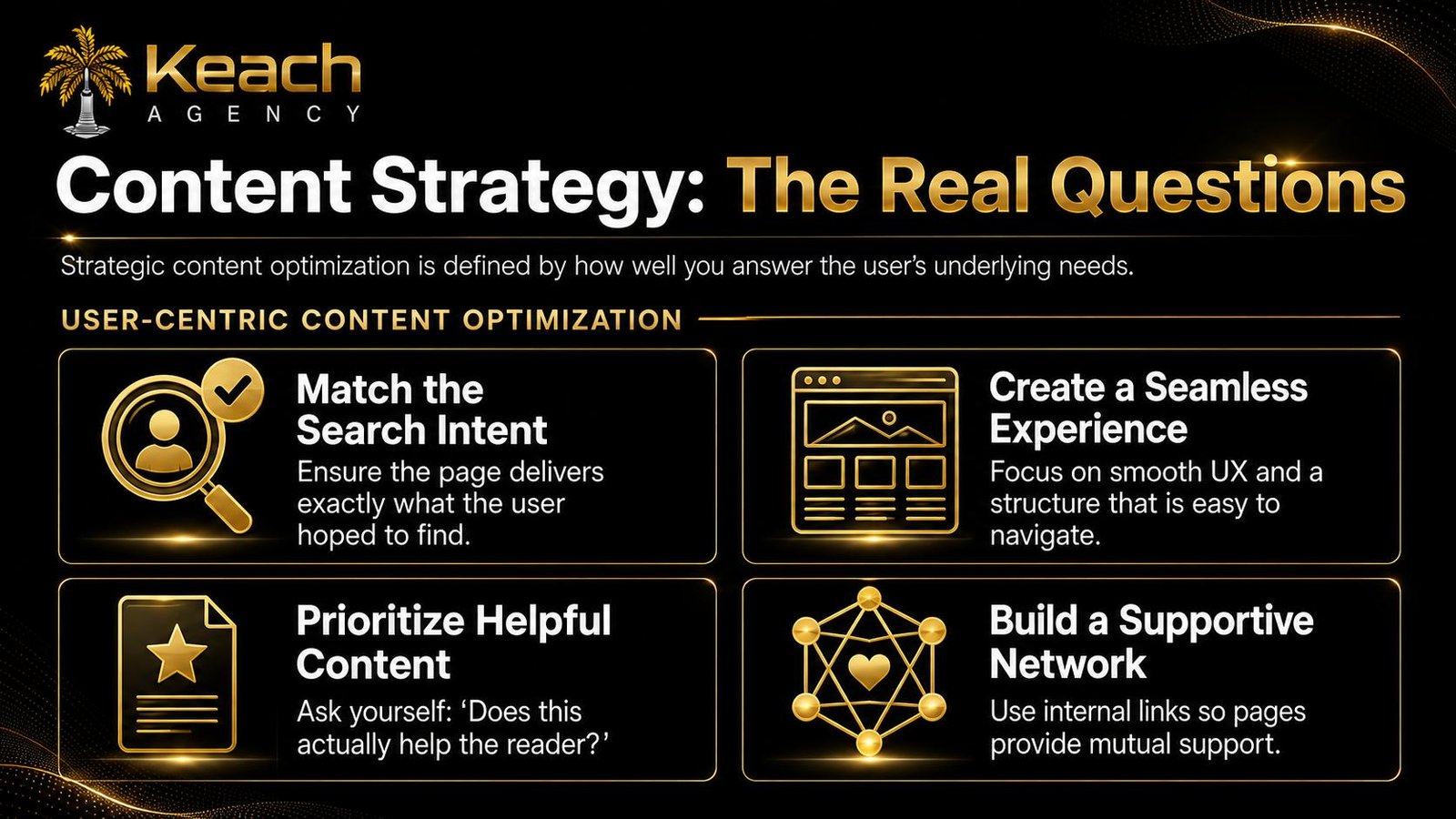
When these line up, rankings usually improve without forcing anything.
Final Thoughts
Most pages aren’t bad. They’re just misunderstood. A strong on-page SEO audit clears that misunderstanding by making the page feel right to a real person first. When that happens, Google usually catches up.
Not sure what’s noise and what actually matters?
Most on-page SEO audit mistakes come from chasing the wrong fixes.
FAQs
What is an on-page SEO audit?
An on-page SEO audit looks at content, structure, keywords, internal links, and experience to help Google understand a page more clearly.
What are the most common on-page SEO audit mistakes?
Ignoring intent, forcing keywords, weak internal linking, trusting tools too much, and using generic checklists.
How detailed should an on-page SEO audit checklist be?
Detailed enough to catch real problems, but flexible enough to fit the page and audience.
Can fixing common on-page SEO errors really help rankings?
Yes. When pages become clearer and easier to use, rankings often follow.
How often should an on-page SEO audit be done?
Every six months, or whenever things feel stuck for no obvious reason.