
Websites may appear similar at first glance, yet the way they are built can differ significantly.
Some pages stay the same for every visitor. Others change constantly. Many adjust smoothly across phones, tablets, and desktops. These variations come from the underlying web design approach used during development.
Understanding basic web design types is not just a technical exercise. It directly affects how a site performs, how easily it can be updated, and how users experience it. Choosing the right structure early often prevents costly changes later.
Not all types of web design serve the same purpose.
- Some emphasize simplicity.
- Some focus on flexibility.
- Some prioritize adaptability.
Knowing the difference helps you make smarter decisions.
Unsure which website structure fits your goals?
Confused by too many design options?
Why Web Design Structure Matters
When people think about web design, they usually imagine visual elements like colors or typography.
Design goes deeper than appearance.
It determines how content behaves, how pages load, and how information is managed. Different web design types represent different architectural choices. Each one shapes performance, maintenance, and scalability.
A personal portfolio does not need the same system as an online store. A blog behaves differently from a corporate landing page. These practical differences explain why multiple types of web design exist.
There is no universal solution. Only suitable ones.
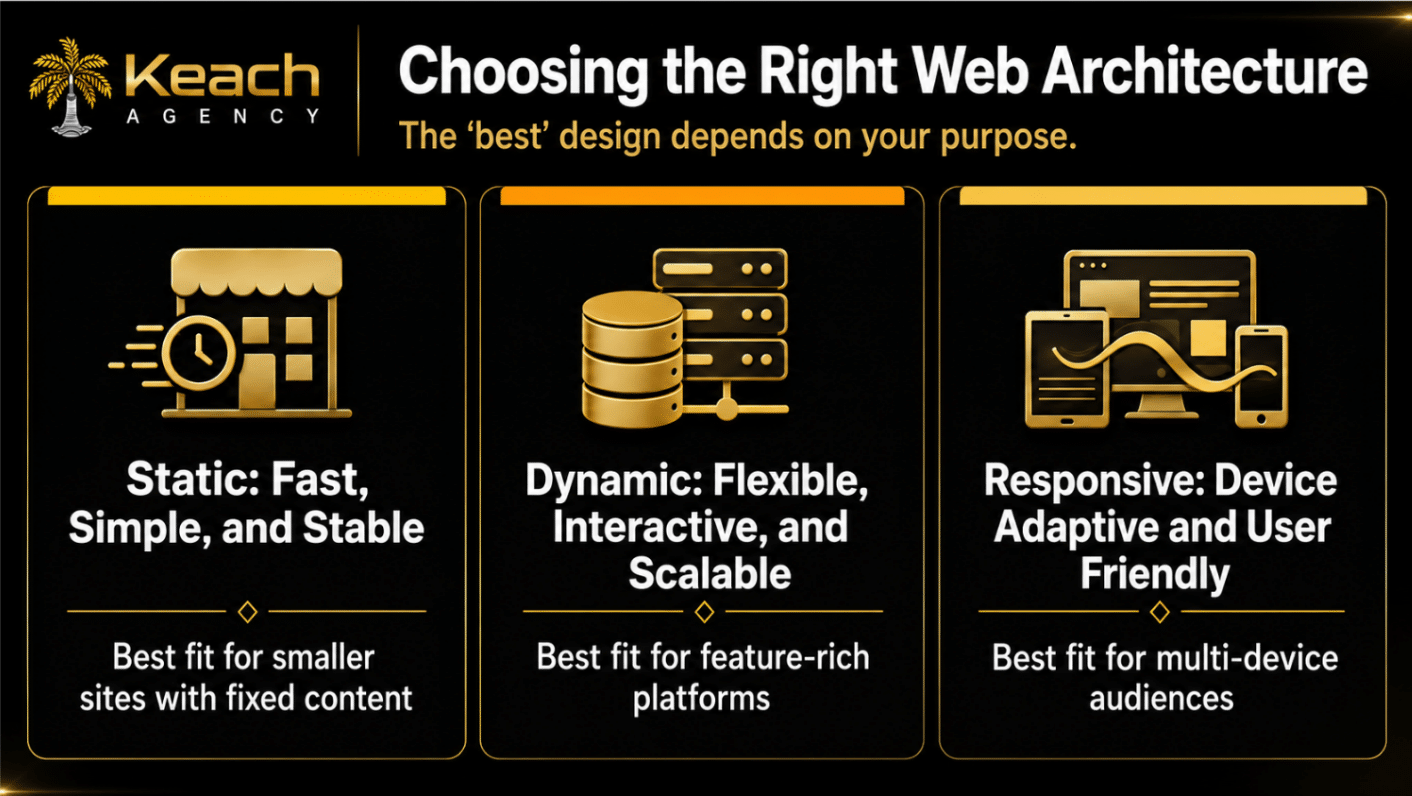
1. Static Web Design
Static websites follow the most straightforward model.
Every visitor sees the same content, displayed exactly as it was created. Pages are built with fixed code, so updates require manual edits. Nothing changes automatically unless a developer modifies the files.
This design style works best when information rarely changes.
Common examples include:
- Portfolio websites.
- Basic company pages.
- Informational resources.
- Event announcements.
Static web design offers clear advantages. Pages load quickly. Development is simpler. Hosting requirements remain minimal. Limitations appear as complexity increases.
Frequent updates become time-consuming. Interactive features require additional systems. Scaling may introduce friction. Still, static layouts remain one of the most dependable web design types for smaller projects.
2. Dynamic Web Design
Dynamic websites operate differently. Instead of fixed pages, content is generated using data and logic. Information can change automatically without manually editing each page. Databases, scripts, and content management systems drive this behavior.
Most modern platforms rely on dynamic structures.
Typical use cases include:
- E-commerce stores.
- Blogs and news platforms.
- Membership portals.
- Booking systems.
Dynamic types of web design allow greater flexibility. Content updates scale efficiently. Users can interact with the system. Pages adapt based on conditions or inputs.
This flexibility introduces complexity.
Development requires planning. Performance optimization becomes important. Maintenance remains ongoing. Yet for websites requiring frequent updates or interactive features, dynamic design is often necessary.
3. Responsive Web Design
Responsive design focuses on adaptability rather than content logic. Instead of building separate versions for each device, responsive layouts adjust automatically to screen size. Elements resize, reposition, or reorganize depending on available space.
This approach has become essential.
Users now browse from many devices. A layout that works only on large screens creates immediate usability issues. Responsive behavior ensures a consistent experience across phones, tablets, and desktops.
Benefits include:
- Improved mobile usability.
- Consistent interface behavior.
- Simplified maintenance.
- Better accessibility.
Without responsive design, even visually attractive websites may feel broken on smaller screens. This explains why responsive layouts are among the most widely adopted web design types today.
Comparing the Core Web Design Types
Each design model solves different problems. Viewing them side by side clarifies the distinctions.
Planning a new website or redesign?
Worried about picking the wrong structure?
How UI Design Types Influence Experience
Structure alone does not define usability.
Interface decisions strongly shape how users interact with a website. This is where UI design types become important. While web design governs layout and behavior, UI choices define navigation clarity, visual hierarchy, and interaction flow.
For example:
- Minimal UI design types emphasize focus and readability.
- Interactive UI styles encourage engagement.
- Content-driven UI layouts prioritize scanning efficiency.
Weak UI decisions can undermine technically sound websites. Confusing navigation, inconsistent spacing, or cluttered interfaces increase friction. Precision in UI design improves comprehension and comfort.
Design is not just how a website looks. It is how easily it works.
Choosing the Right Approach
Selecting among web design types requires practical thinking.
Ask simple questions.
- How often will content change?
- Will users interact with the system?
- Is mobile access important?
- How much maintenance is realistic?
Static layouts suit stable informational sites. Dynamic systems support complex functionality. Responsive behavior is almost always necessary in modern projects.
Effective design decisions balance flexibility, performance, and usability. Not assumptions. Not trends.
Why Early Decisions Matter
Initial design choices rarely stay small. They influence future updates, scalability, and user experience. A mismatched structure can introduce avoidable constraints. A well-chosen approach supports smoother growth and easier management.
- Websites evolve.
- User behavior shifts.
- Content expands.
- Expectations change.
Flexible foundations reduce future friction.
Need a website that stays practical as you grow?
Looking for guidance before development starts?
FAQs
What is the simplest type of web design?
Static web design is generally the simplest. Pages display fixed content, development is straightforward, and hosting requirements remain minimal. It works well for smaller websites with infrequent updates.
Why do most modern websites use dynamic design?
Dynamic structures allow automatic content updates, user interaction, and scalability. They are ideal for platforms like online stores, blogs, and service-based systems where information changes regularly.
Is responsive design still necessary today?
Yes. Users access websites from various devices. Responsive layouts ensure that pages remain usable and visually balanced across screen sizes, preventing common mobile usability problems.
How do UI design types affect usability?
UI design types shape how users navigate and interpret content. Clear layout, intuitive controls, and consistent visual hierarchy reduce friction, making interactions smoother and more predictable.
Can a website combine multiple design approaches?
Yes. Many websites integrate different web design types. A site may use dynamic content while maintaining responsive layouts. Design strategies often overlap to meet functional and usability needs.