
Web design used to be predictable. Someone opened a browser, typed a few words, clicked a link, and scanned a page. Designers built around that rhythm for years. That rhythm is gone.
Today, people talk on their phones while cooking. They ask questions from their cars. They expect answers without clicking anything at all. At the same time, AI quietly shapes what they see, when they see it, and how the interface responds.
This shift has forced web designers to slow down and rethink things. Not just layouts or colors, but the way a website communicates. Design is no longer only visual. It’s conversational. It listens. Sometimes, it responds before the user even asks. This is where the future of web design is heading, and it’s already happening.
Businesses exploring what modern web design really means beyond visuals alone are already seeing how user behavior is reshaping digital experiences.
Is your website built for how people search now, not years ago?
Voice and AI are changing user behavior fast.
Why Voice Search Changed How Design Works
When people type, they compress their thoughts. When they speak, they don’t. That one difference has changed everything about voice search web design.
Spoken searches sound like real conversations. “What’s the best laptop for graphic design?” “How do I fix slow Wi-Fi at home?” These aren’t keywords. They’re questions.
Web designers now think about how content answers those questions clearly. Pages need a structure that makes sense to both people and machines. Headings matter more. Direct answers matter more. Fluff matters less.
Navigation has changed, too. Voice assistants pull information from pages that are clean, organized, and easy to interpret. A beautiful design that confuses structure won’t perform well in voice-driven results. Design is no longer just about looking good. It’s about being understood.
This is also why businesses are investing more in responsive website design that adapts to modern user behavior across devices and voice-enabled platforms.
UX Design for AI Feels Quiet, Not Flashy
AI-driven experiences rarely announce themselves. When they work well, users barely notice them. UX design for AI focuses on anticipation. Suggesting the right content. Guiding users gently. Reducing effort instead of adding steps.
This means web designers think less about fixed user journeys and more about flexible ones. Interfaces adapt based on behavior. Search results feel smarter. Layouts shift subtly to match intent.
Clarity is crucial here. If an AI misunderstands the user, the experience breaks. Designers now work closely with content and data teams to make sure interfaces communicate clearly. The best AI UX feels simple because a lot of thought went into making it feel that way.
Modern businesses also recognize that user experience directly impacts performance, which is why performance-driven web design strategies focused on conversions have become a priority.
How Web Designers Are Changing the Way They Work
The design process itself looks different now. Research includes listening to how people talk, not just what they click. Designers study voice queries and conversational patterns. This influences copy, layout, and even spacing between elements.
Small details matter more. Feedback messages. Confirmation states. Gentle prompts that reassure users that the system understood them. These moments guide users who aren’t navigating through menus anymore.
Web designers also collaborate more than before. UX design for AI sits between design, development, and content. No single role owns the full experience. It’s built together.
Teams building smarter digital experiences are also focusing on creating high-converting business websites that support evolving customer expectations instead of relying only on visual trends.
Finding it hard to align design with modern user behavior?
Voice and AI require a different mindset.
Voice Search Web Design Is Really About Structure
Designing for voice doesn’t mean stripping visuals away. It means supporting them with a strong structure.
Pages that perform well in voice search usually have clear headings, short sections, and answers placed where they’re easy to find. Designers now think about how a page sounds when read aloud.
- Can a voice assistant pull a clean answer from this page?
- Does the layout support quick understanding?
Interestingly, this approach also improves accessibility. Voice-friendly design often works better for screen readers and users with different needs. Good structure benefits everyone.
Businesses revisiting the fundamentals of effective web design and usability often discover that structure influences both SEO performance and user trust.
The Future of Web Design Feels More Intentional
The future of web design isn’t louder or more complex. It’s calmer.
AI will continue personalizing experiences quietly. Voice interactions will feel more natural. Interfaces will adapt without asking users to learn new rules.
For web designers, this means returning to fundamentals. Clear communication. Logical flow. Empathy for how people actually behave online. Trends will change. Tools will evolve. But understanding intent will remain the core skill.
Responsive experiences will continue playing a central role as users shift between mobile, desktop, voice assistants, and smart devices. That is why responsive design is no longer optional for modern websites.
What Web Designers Are Prioritizing Now
Here’s how focus areas are shifting:
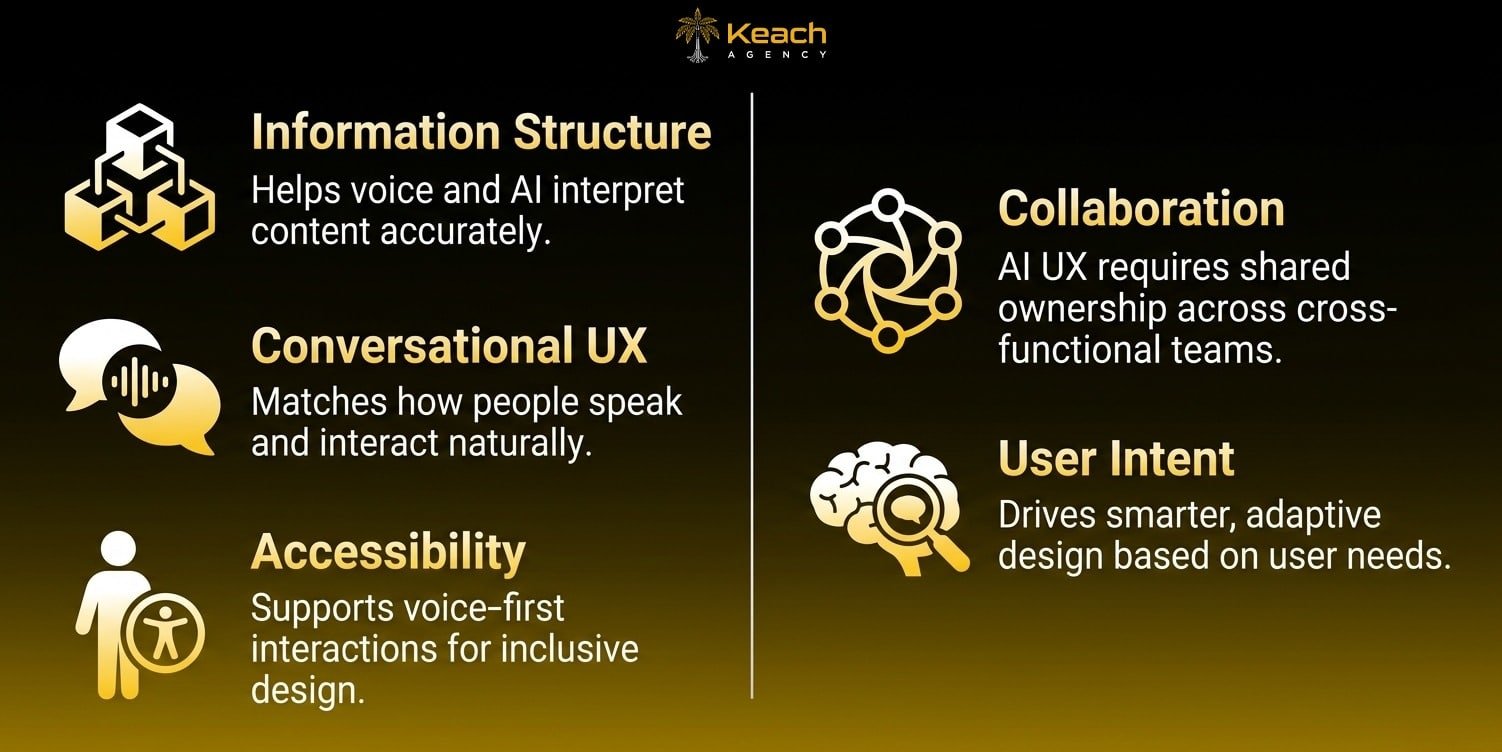
These priorities shape how web designers stay relevant in an AI-driven world.
Final Thoughts
Web design isn’t just about screens anymore. It’s about conversations, expectations, and quiet intelligence working in the background. As voice search and AI UX become part of everyday life, the best web designers who stay human in their approach will create experiences that feel natural, helpful, and lasting. Technology will keep moving. People will still want things to make sense. And that’s where good design lives.
Brands that combine thoughtful UX, responsive structure, and conversion-focused web development strategies will be better positioned for the future of digital experiences
Unsure how your site fits into the future of web design?
KeachAgency builds experiences that grow with technology.
FAQs
How are web designers adapting to voice search?
They focus on conversational language, clear structure, and content that answers questions directly so voice assistants can interpret it easily.
What does UX design for AI involve?
It involves designing interfaces that adapt, predict needs, and communicate clearly with both users and intelligent systems.
Does voice search web design affect SEO?
Yes. Pages that answer questions clearly and use structured content often perform better in voice-driven results.
How is AI shaping the future of web design?
AI enables personalization, adaptive layouts, and smarter navigation, shifting design away from static experiences.
What should web designers focus on going forward?
Understanding intent, maintaining clarity, improving accessibility, and designing for multiple input types like voice and text.