
Every few years, the same debate returns.
- “Web design is saturated.”
- “AI will replace designers.”
- “Anyone can build a website now.”
And yet, businesses keep launching new sites. Old ones keep getting redesigned. Startups still search for designers. Established companies still invest heavily in user experience.
That tension is interesting. If tools are getting smarter and website builders easier, why does the demand for web designers refuse to fade?
Because building pages and designing experiences are not the same thing.
The future of web design is not about whether websites can be created faster. It is about whether they can work better. Those are very different challenges.
Wondering If Web Design Is Still A Smart Skill To Learn?
Looking at where the industry is moving tells a clearer story.
Why “Web Design Is Dying” Keeps Failing as a Prediction
Digital industries attract dramatic claims.
Something new appears, and suddenly an entire profession is declared obsolete. Web design has survived this cycle repeatedly. First with drag and drop builders, then with templates, and now with AI-driven tools.
What these predictions usually miss is simple.
Technology changes how things are produced. It rarely removes the need for thoughtful decisions.
Creating a functional webpage has never been easier. Creating a site that feels intuitive, communicates clearly, loads quickly, and guides users toward action remains surprisingly difficult.
That gap sustains the demand for web designers. Automation simplifies mechanics. It does not replace judgment.
The Demand for Web Designers Is Driven by Behavior, Not Hype
Websites are no longer passive placeholders.
They sell products. Capture leads. Deliver services. Build credibility. Support customers. Shape brand perception. Every one of these roles depends on how real people interact with digital interfaces.
User behavior is messy. Contextual. Emotional. Inconsistent.
Software can generate layouts. It cannot fully predict human hesitation, confusion, or trust signals. Businesses quickly discover this when a perfectly “built” site fails to perform.
This is where designers remain critical. They translate business goals into user-friendly structures.
The demand for web designers survives because user experience problems never fully standardize.
Web Design Career 2026 Feels Different Than Many Expect
People imagining a web design career 2026 often picture visual work alone.
Choosing colors. Arranging sections. Styling pages.
Modern web design has expanded beyond aesthetics. Today’s designers often navigate a mix of structure, psychology, and performance constraints. Decisions involve:
- How users scan content.
- Where attention naturally drops.
- How friction disrupts navigation.
- Why do certain flows convert better?
- How layout choices affect loading speed.
The role becomes less about decoration and more about clarity.
Designers increasingly solve communication and interaction problems, not just visual ones. This shift strengthens the profession rather than weakening it.
The web design career 2026 rewards thinking, not just styling.
Web Design Trends 2026 Reflect Pressure From Users
Trends often get reduced to visual fashion.
Minimalism. Bold typography. Animations.
But most web design trends 2026 are responses to user expectations, not artistic movements. People browse quickly. Attention spans are short. Patience for confusing interfaces is low.
Differentiating:
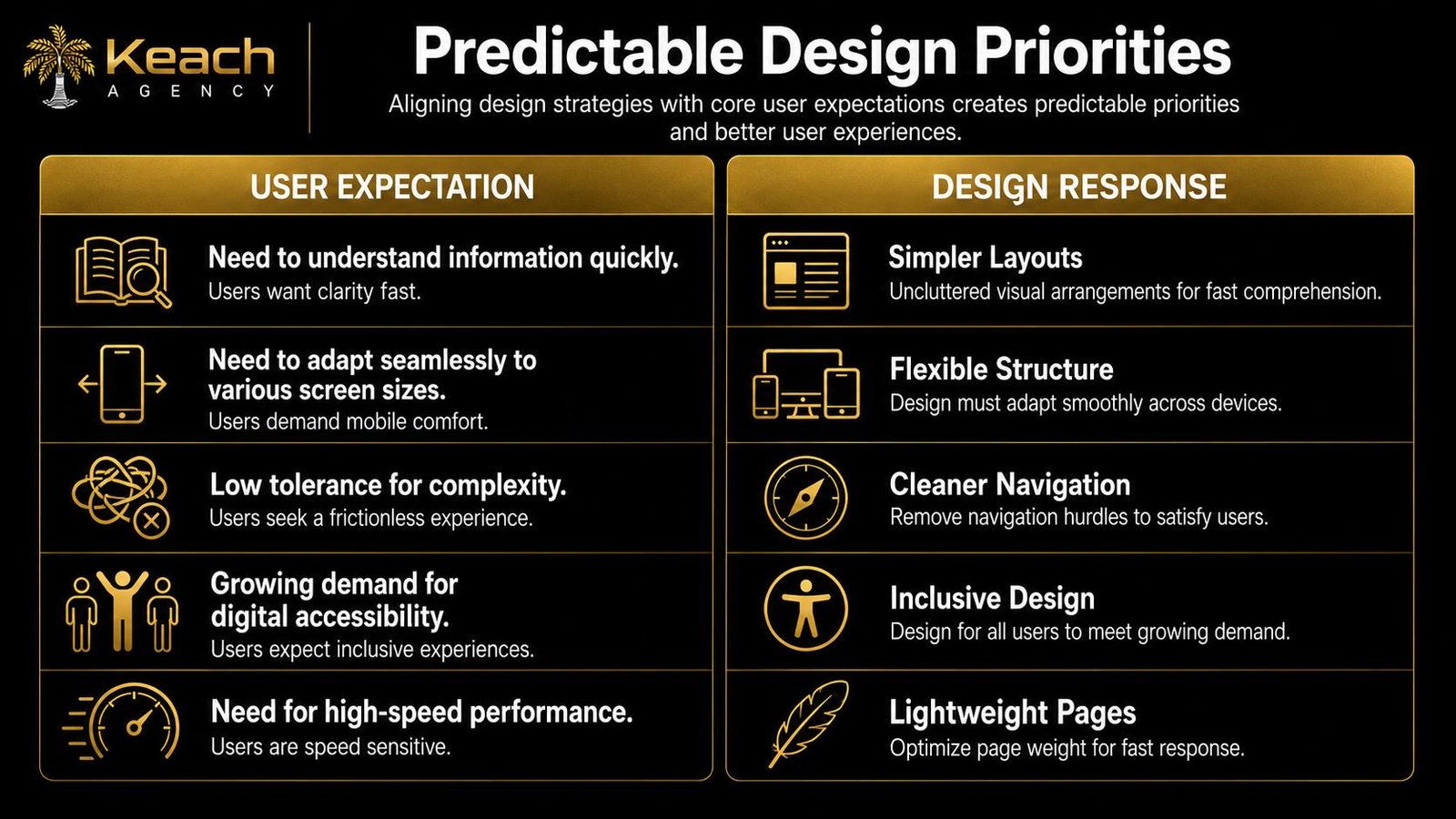
These are practical adjustments. Design follows human behavior.
Trying To Understand What Works On Modern Websites?
Tracking 2026 trends prevents outdated choices.
Keach Agency helps interpret digital shifts without guesswork.
Why Easy Website Builders Do Not Erase Designers
DIY tools are powerful.
They reduce technical barriers. Speed up launches. Help small businesses go online. But their biggest strength also creates a limitation: standardization.
When many sites rely on similar templates, differentiation becomes harder. User journeys often feel generic. Brand identity blurs. Conversion paths lack nuance.
Designers step in to refine these gaps.
Customization, hierarchy, readability, and interaction flow still depend heavily on human interpretation. Tools accelerate construction. They do not replace strategic thinking.
This dynamic keeps the future of web design very much alive.
Specialization Quietly Shapes Opportunity
General design skills remain useful. Specialized skills often command stronger demand.
Instead of broad “web designer” roles, businesses increasingly seek focused expertise:
- E-commerce experience design.
- SaaS interface optimization.
- Landing page conversion strategy.
- Accessibility centered layouts.
- Performance-sensitive UI decisions.
Specialization reduces competition and increases perceived value. It also reflects how websites now serve highly specific business functions.
Not every digital product has the same design needs.
The Future of Web Design Favors Adaptable Thinkers
Static skillsets age quickly.
Tools evolve. Platforms change. Patterns shift. Designers who stay relevant typically adapt without anchoring identity to any single technology.
What persists is a deeper understanding.
- Why do users hesitate?
- Why layouts confuse.
- Why flows succeed or fail.
This perspective remains valuable regardless of software changes.
The future of web design is less about mastering tools and more about understanding people.
A Field That Keeps Expanding Rarely Disappears
Industries collapse when demand weakens.
Web design faces the opposite reality. Businesses rely more heavily on digital presence each year. Competition online intensifies. User expectations continue rising.
These pressures increase the importance of thoughtful design. The demand for web designers evolves. It does not vanish.
Still Unsure If Web Design Makes Sense As A Path?
Looking beyond headlines reveals stronger long-term signals.
FAQs
Is web design actually saturated in 2026?
Competition exists, particularly at entry levels. However, saturation often applies to generic skills rather than specialized expertise. Designers skilled in UX thinking, accessibility, conversion logic, and performance-aware layouts continue seeing steady demand. Market dynamics reward differentiation and adaptability.
How do AI tools affect web design career 2026 prospects?
AI tools primarily reshape workflows. Designers use them for drafting concepts, generating assets, or exploring variations. Human judgment remains central for strategy, usability, and brand alignment. Professionals who integrate automation typically improve efficiency rather than facing displacement.
What skills matter most for the future of web design?
Key strengths include user experience structure, responsive layout logic, accessibility considerations, readability design, and performance awareness. Visual design remains relevant, but functional decision-making increasingly defines professional value.
Are web design trends 2026 mostly aesthetic changes?
No. Many shifts reflect usability and speed priorities. Cleaner interfaces, simplified navigation, mobile-friendly structures, and lightweight designs dominate. Visual style evolves, but user-centered adjustments drive most meaningful trends.
Is web design still a stable long-term profession?
Stability depends on continuous learning. Designers who update skills and understand evolving user behavior maintain strong prospects. Those relying solely on static techniques face higher competition. Adaptability remains the strongest career safeguard.


