
I’ll be honest: when I first started in software, I thought all development was basically the same. You write some code, test it, ship it, done. Fast forward a few years, and I realized how wrong I was. The software world is huge, and picking the wrong type of software development is like buying a sports car to drive through mud; you’re going to get stuck.
I remember this one project. We were building a small tool for tracking customer feedback. I insisted we needed a mobile app, even though 90% of the customers were sitting at desks using laptops. We wasted weeks, got frustrated, and the adoption was… well, let’s just say, underwhelming. That’s when I learned: understanding the types of software development isn’t just a technical detail. It’s a business decision.
These days, software isn’t just code; it’s a bridge between ideas and results. And knowing the software development trends can mean the difference between a tool that works and a tool that drives you crazy.
Wondering which software will actually save you time and headaches?
Keach Agency helps businesses pick software that actually works, not just looks nice on paper.
Curious how business software solutions can be without breaking the bank?
Understanding the Types of Software Development
Software is like a toolbox. Each software development type has a purpose:
Web Development
Your website is often the first impression of your business. Slow pages, messy layouts, broken links, they all scream “unprofessional.” Web development ensures everything works smoothly, looks good, and keeps customers happy.
Mobile App Development
People live on their phones. A well-built app is convenience, trust, and engagement all in one. Bad apps? They get deleted before anyone even gives them a chance.
Desktop Software Development
Think heavy-duty tools like accounting programs, design software, or custom tools for industries where offline reliability matters.
Embedded Systems Development
Ever wonder how smart fridges or wearables “just work”? That’s embedded software doing its magic. With IoT growing, this type is increasingly critical.
Enterprise Software Development
Big businesses run on these systems. ERPs, dashboards, and communication tools; they keep operations smooth, and without them, large companies would descend into chaos.
Picking the right type is strategic. The wrong choice can waste time, frustrate your users, and tank your ROI.
Why Software Development Trends Matter
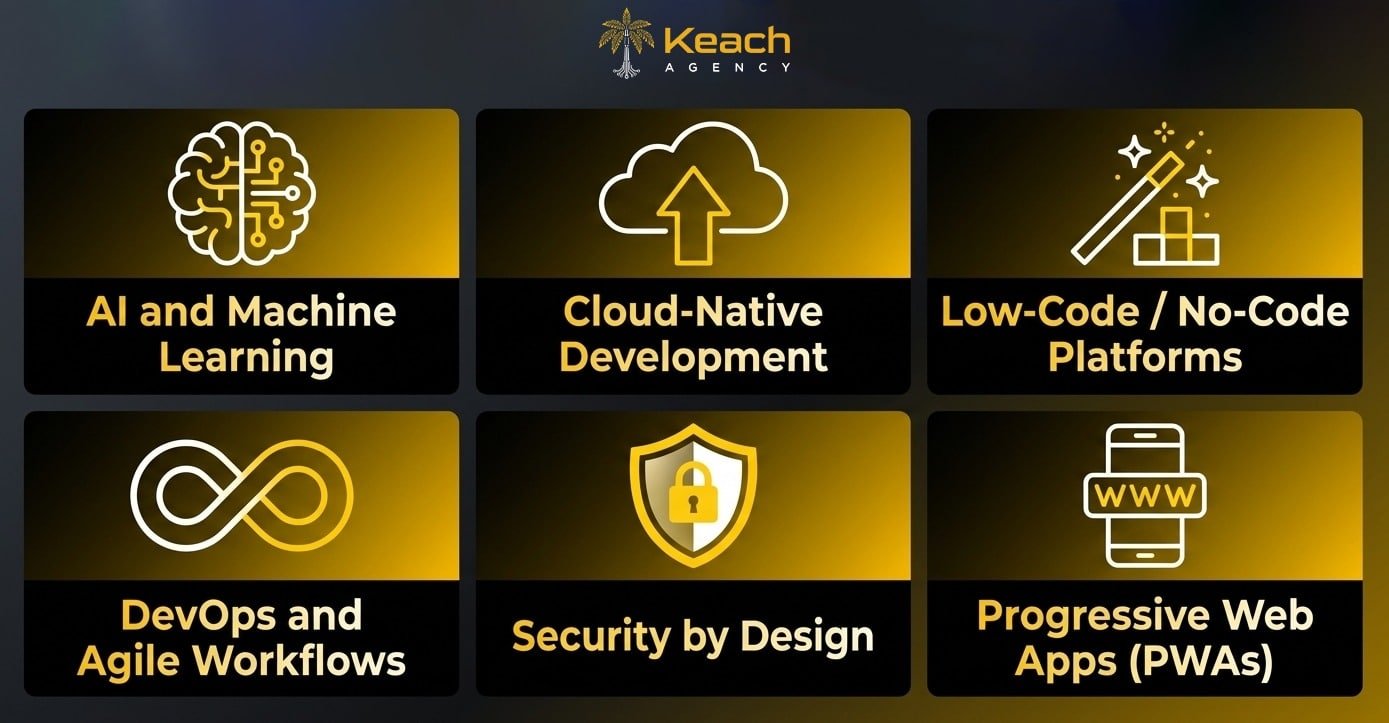
Even perfect software becomes irrelevant if it doesn’t evolve. Here’s where software development trends come in. They highlight what’s working now and what’s about to explode:
AI and Machine Learning
Not just sci-fi anymore. From predictive analytics to smart chatbots, AI can automate tedious tasks, suggest the next product to a customer, or even detect anomalies before they become problems.
Cloud-Native Development
Moving software to the cloud allows faster updates, collaboration, and scaling without pulling your hair out over servers.
Low-Code / No-Code Platforms
You can build functional software without writing every line of code. Small teams love this because it speeds up prototyping and reduces development costs.
DevOps and Agile Workflows
Continuous integration, automated testing, and rapid feedback loops keep your software stable, reliable, and adaptable.
Security by Design
With breaches happening constantly, secure software isn’t a bonus; it’s mandatory.
Progressive Web Apps (PWAs)
A hybrid between web and mobile apps, giving users fast, app-like experiences without downloads.
Following these software development trends ensures your business software solutions stay current, competitive, and actually useful.
Making Software Work for Your Business
Here’s a truth I’ve learned: trends are exciting, but applying them poorly is worse than ignoring them. Businesses that get software right do three things consistently:
1. Match the software type to the actual problem
Don’t build a mobile app for a desktop-heavy audience.
2. Plan for growth
Cloud-native or low-code solutions can scale smoothly, rather than collapsing when your user base grows.
3. Prioritize UX and security
Fast, intuitive, and secure software keeps employees productive and customers loyal.
Ever wondered which types of software development actually give the best ROI?
KeachAgency helps businesses deploy software that actually makes life easier.
Types vs Trends: Quick Visual
Software Type |
Trend Alignment |
Key Benefit |
| Web Development | PWAs, AI integration | Faster, engaging websites |
| Mobile Development | AI, cloud-native, security | Higher user engagement, accessibility |
| Desktop Software | Security, cloud sync | Reliable offline use |
| Embedded Systems | IoT, AI | smart devices, automation |
| Enterprise Software | Low-code, DevOps | Operational efficiency |
This shows how software development trends enhance each software type, making the investment pay off faster and smarter.
Looking Ahead
Software isn’t just a tool; it’s the engine behind modern business. The right types of software development, combined with smart software development trends, can help your business:
- Save hours of manual work every week.
- Improve customer experience and satisfaction.
- Scale efficiently without chaos.
- Stay competitive in a fast-changing market.
Need help deciding which business software solutions will make a real difference?
KeachAgency helps businesses pick, implement, and scale software that works for the real world.
Looking for guidance so your software investments actually pay off?
FAQs
What are the main types of software development?
Web, mobile, desktop, embedded, and enterprise. Each serves different needs and audiences.
Why do software development trends matter?
They show where technology is headed. Following trends ensures your solutions stay modern and effective.
How do I choose the right software type?
Assess your goals, audience, and workflows. Expert guidance helps avoid costly mistakes.
How do business software solutions improve operations?
They automate tasks, save time, increase efficiency, and improve user and employee satisfaction.
Can low-code platforms replace traditional software development?
Not fully, but they allow rapid prototyping and deployment alongside traditional development.