
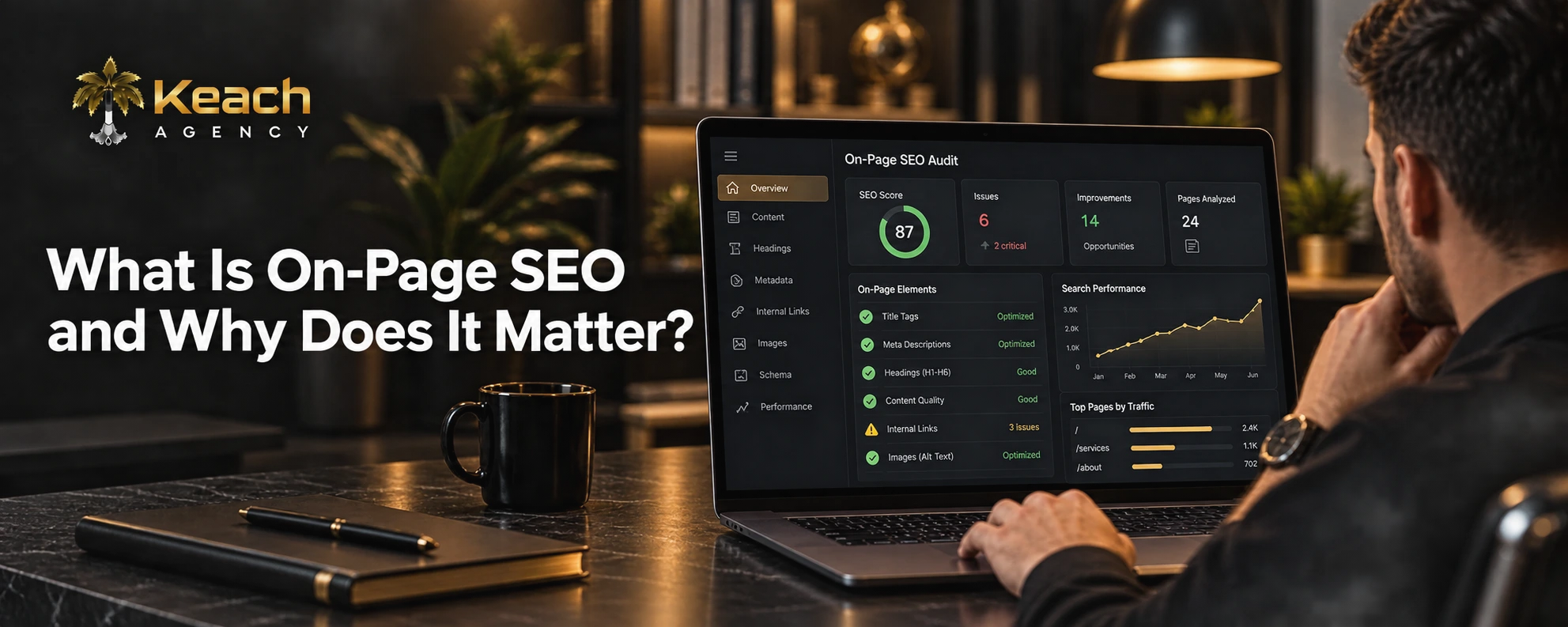
If you ask ten people what SEO means, you will get ten different answers. Backlinks. Technical audits. Content strategies. It all counts, but first, there is a level of decision about whether any of this works. The page.
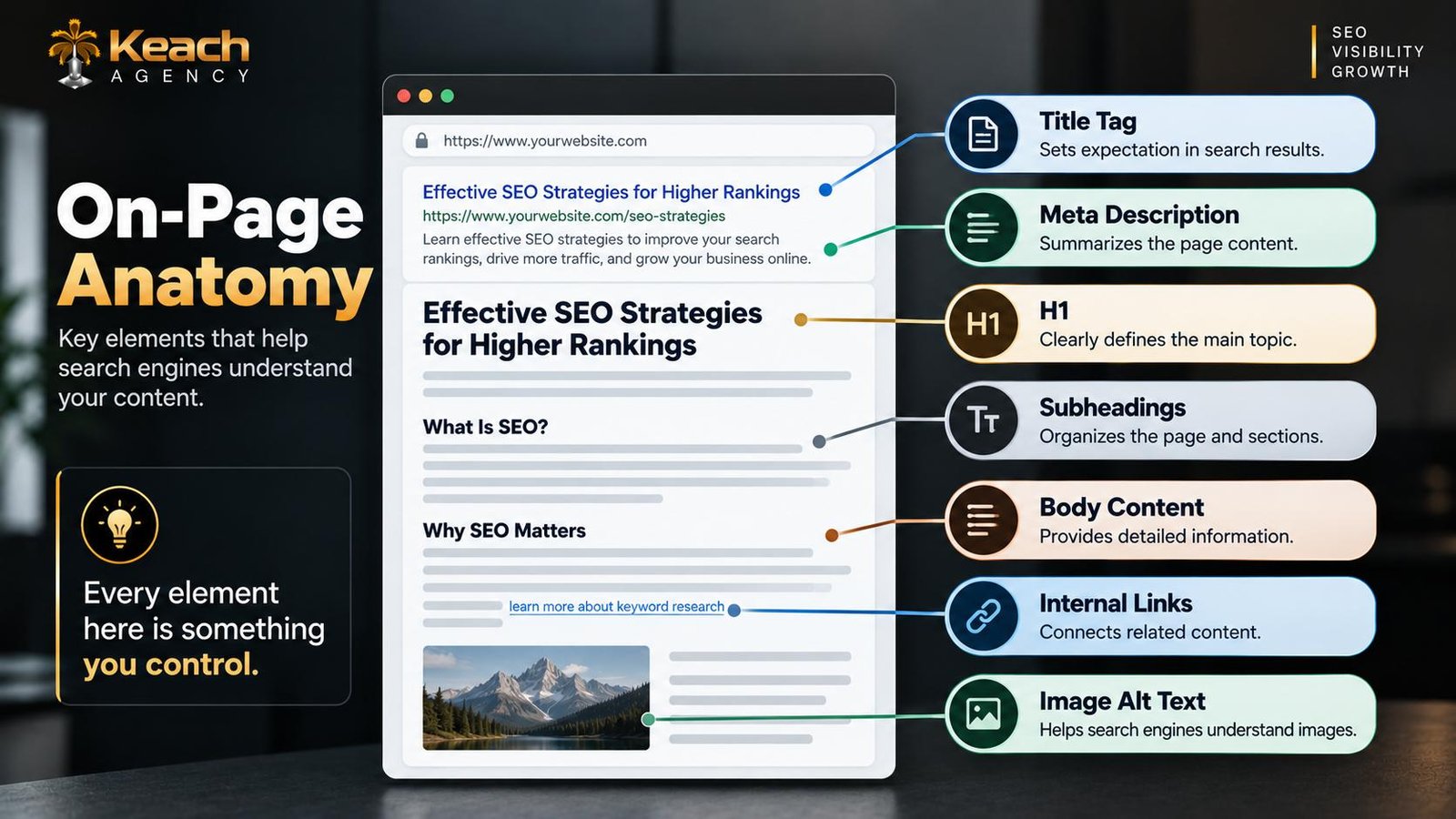
On-page SEO means optimization of one specific page, making it as understandable and helpful to both the search engine and the visitor as it can be. Descriptive titles, headings that structure the information on the page, fast loading, descriptive images, and internal links leading a visitor to something interesting next.
It seems too elementary to be important, but those pages that fail on this level will never make it, regardless of how many links are pointing at them.
The Basics Most People Skip
There’s a temptation to treat this as a checklist you complete once and forget. That’s where things go sideways.
The fundamentals are straightforward. One clear title tag per page. A meta description written for humans rather than keyword counters. A single H1 that matches the page’s purpose. Descriptive subheadings that break content into readable sections. Alt text on images that describes what’s actually in them.
It’s not rocket science. The difficulty comes from doing it consistently in hundreds or thousands of pages, particularly if the website has been evolving via template changes, migration processes, and content additions from various individuals over many years. It’s then that simple on-page SEO becomes no longer simple, but turns into an audit process.
The thing that has changed recently lies in the importance of the fundamentals mentioned. Search engines have improved their ability to understand the context. Well-built pages are comprehended more quickly than pages where the very same concept is hidden in a block of text.
The Anatomy of On-Page SEO
The Factors That Actually Move Rankings
Relevance of content comes first. The website should be relevant to the user intent behind the query, rather than the literal meaning of the query itself. If someone is looking for the definition of something, they would want a different web page compared to the person who is ready to purchase that thing. That is the most frequent mistake people make.
Keyword placement matters, though far less than it used to. Keywords belong in titles, headings, and naturally in the body where they fit the sentence. Forcing them in reads badly and helps less than people hope. The old density games don’t work anymore.
Internal linking is the factor most sites underuse. Links between related pages help crawlers understand structure and help visitors find what they need next. A site where every page stands alone is harder to navigate and harder to rank.
Page speed and mobile experience round out the list. Neither is purely an on-page concern, but both affect how a page performs. A page that loads slowly on a phone loses readers before the content even appears, and search engines notice the same signals users do.
Not Sure Which Pages Are Holding You Back?
Keach Digital Agency audits on-page structure and finds the gaps.
Why On-Page Work Deserves Ongoing Attention
The importance of on-page SEO shows up most clearly when a site stops maintaining it. Content ages. Products get discontinued, services change, and pages that were once accurate drift out of date. Titles written five years ago may no longer match what the page actually says. Links break. Images fail to load. None of this happens overnight, which is exactly why it goes unnoticed.
Proper maintenance will prevent small things from becoming big problems. A review of top landing pages performed quarterly will detect most potential problems before they impact your traffic. Ensuring that the title tag matches the content, ensuring that internal links are not broken, and ensuring that the loading time hasn’t slowed down is tedious but worthwhile.
There are a number of effective on-page SEO strategies that provide consistent results. Having a single topic per page rather than combining unrelated topics into one page. Using subheadings for each topic to indicate its contents for someone skimming through the text. Including links to other relevant pages in the body text rather than the sidebar. Keeping the paragraphs brief enough to be legible on a mobile device.
Working with on-page SEO services makes the most sense for sites that have outgrown casual maintenance. Once you’re managing hundreds of URLs, an agency-side structure keeps standards consistent across every page rather than depending on whoever last touched it. That consistency is what separates sites that hold their rankings from ones that slide every time an algorithm update rolls through.
Conclusion: The Foundation Everything Else Rests On
Link building and technical fixes get more attention because they feel more dramatic. But an unclear, poorly structured, or out-of-date page will struggle regardless of what points at it. On-page work is the foundation, and foundations are boring right up until something cracks.
Keach Digital Agency approaches on-page SEO as ongoing maintenance rather than a one-time project. Whether your site needs a full audit or a steady hand keeping pages current, the goal stays the same. Pages that search engines understand and people actually want to read.
Is Your Best Content Being Overlooked?
Structure, clarity, and consistency might be wrong.
FAQs
How often should I analyze my pages?
A review of the top pages every quarter is good for most sites. Sites with seasonal traffic and products need to be reviewed monthly because having old information can damage conversions long before rankings get affected.
Is there a certain word count for ranking?
Word count is not important by itself, while the depth of a page is crucial. The page should have enough content to properly address the query. Short pages tend to underperform due to unanswered questions rather than being too short.
Is it possible to do that on my own?
Yes, for a small website. The problem is associated with scale; once you are managing hundreds of pages within a template, maintaining the same standard usually takes time and effort from someone else.
What is the biggest mistake you can make?
It’s overstuffing keywords in titles and headings. It looks bad, it does not help in rankings anymore, and it makes a page untrustworthy.