
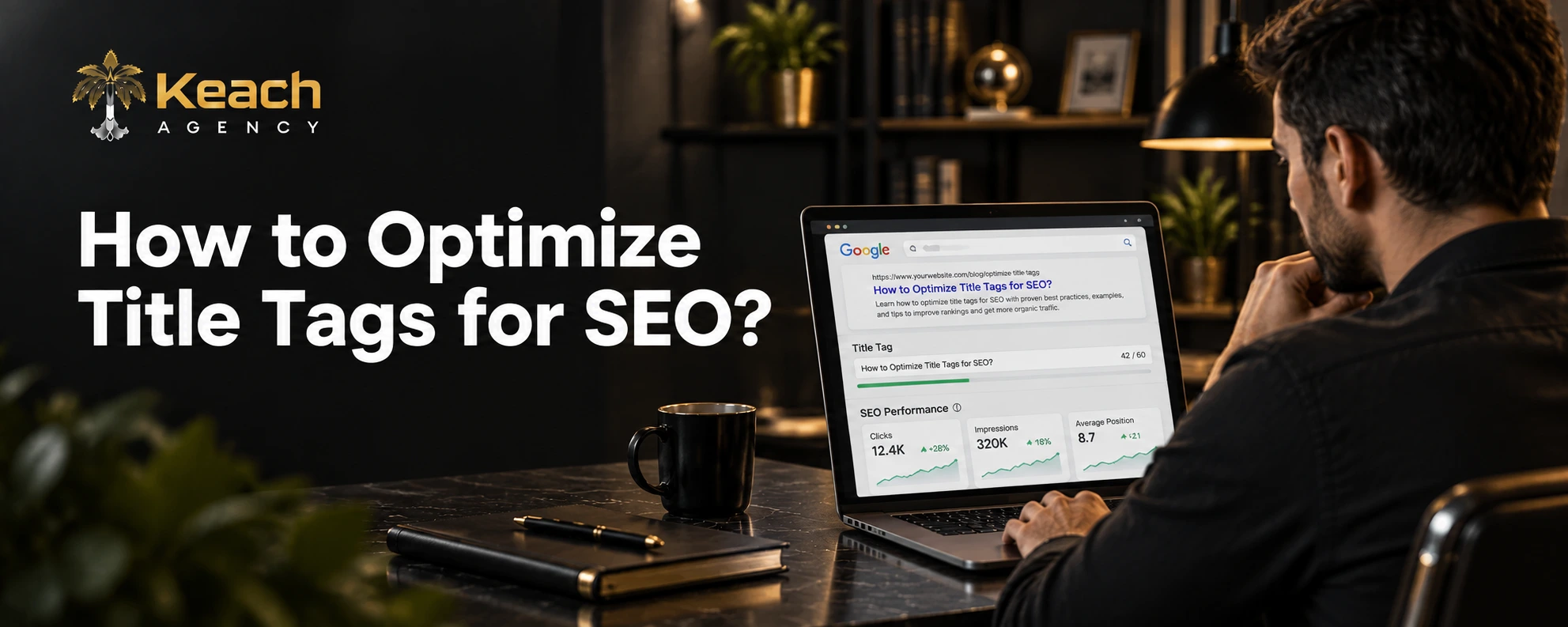
Title tags are the very first thing people will see on your website, as well as one of the first things Google looks at to decide the nature of a web page. This makes them particularly valuable, and it’s the reason why a page that has a poor title can perform poorly for many years without people even figuring out what the problem is.
The frustrating part is that title tags appear to be a pretty easy thing. Text that you see in your browser tab, text that appears in search results. But all the choices that went into creating this text- their length, wording, and relevance to the web page itself- define everything. Getting title tags done properly is one of the highest leverage tasks in SEO, while getting it wrong puts an invisible cap on your pages’ performance no matter how great your content is.
Why Title Tags Still Matter So Much
Competitive search real estate, after all, is where every listing title is the biggest block of text you can find on the page. This is the factor that differentiates whether your listing will be clicked on or passed over, and click-through rates feed back into the algorithm in terms of determining relevance.
The other task of the title tag is to become the primary pointer to what the content of that web page is. Essentially, the title tag informs the algorithm and the user what should be expected from the page. The poor performance of a web page that has a badly written title tag is attributed to the fact that it is misleading the algorithm.
There is a third function that the title serves that is often not even considered. The title is seen in many different places aside from just search results pages; bookmarks, sharing posts, and other internal systems all use the title tag.
What Makes a Title Tag Work
A strong title does three things at once. It describes the page accurately, gives the reader a reason to click, and includes the terms people are actually searching for without stuffing them in.
That balance is harder than it sounds. Titles that lean too heavily on keywords read like machine output and lose clicks. Titles that lean too heavily on cleverness read well but fail to signal what the page is about. The middle ground is specific, plain language that says exactly what the page delivers.
Good on-page SEO services treat title work as part of a broader system rather than a standalone task, because titles interact with headings, meta descriptions, and internal links in ways that shape how a page gets understood. Writing for the person scanning a page of results rather than for a tool will always outperform a title that makes them guess.
Anatomy of a Good Title Tag
How to Write SEO Titles That Earn Clicks
Mastering SEO titles requires understanding their function within the search results. Titles must convey the topic, distinguish themselves from other results, and provide motivation for choosing your result over the one above.
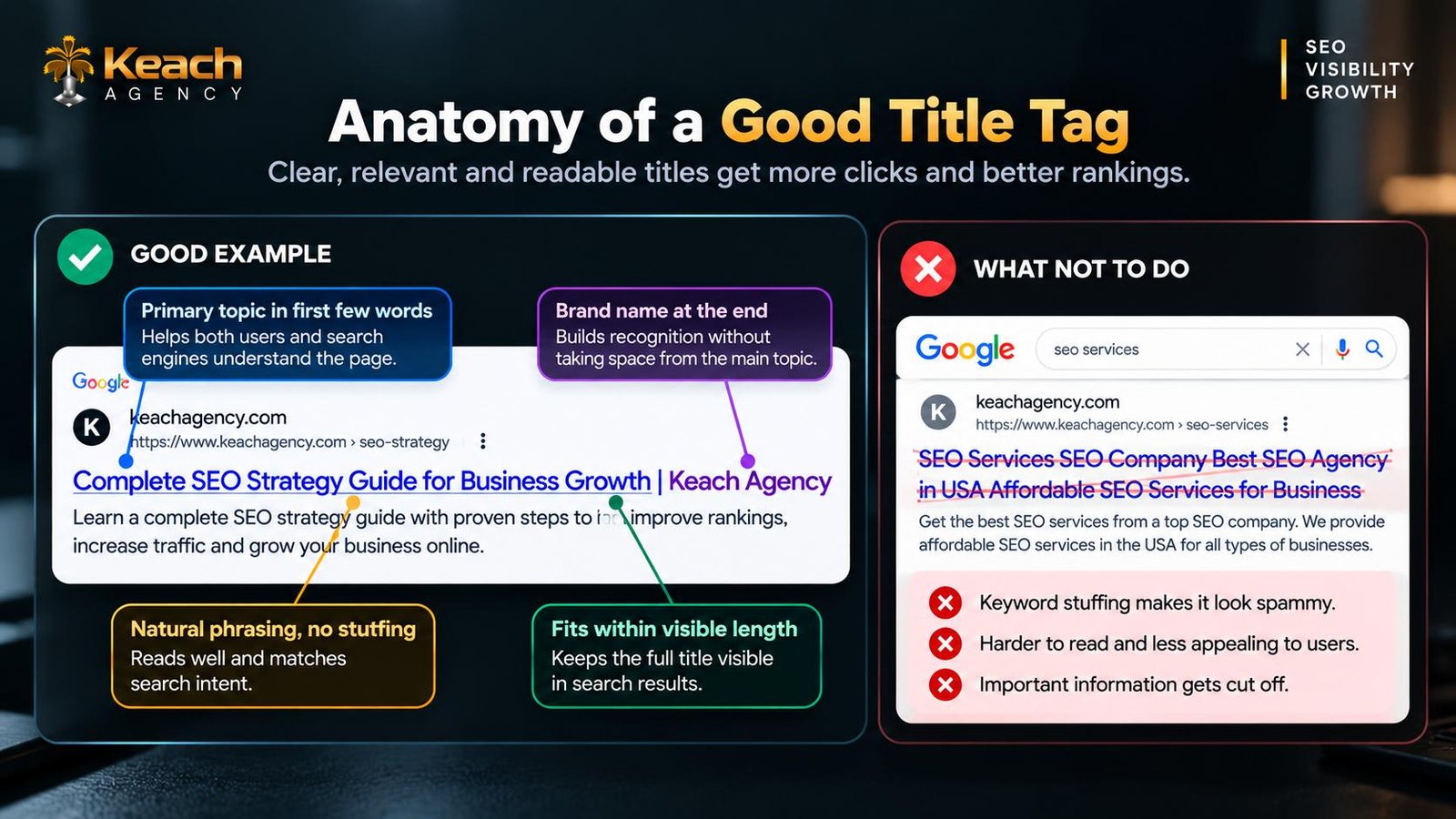
A good idea would be to begin the title with whatever the page is dedicated to, rather than the name of the brand or a generic opening phrase. If the page is devoted to removing grease deposits, then the title should start with such information rather than having the main keyword hidden somewhere in the middle. Brand names need to be put at the very end because they will be more relevant to the reader and add authority to the title rather than distract him.
It is also advisable to read the title aloud. If the title sounds like something no human would utter, chances are that it will look the same to the person browsing through the results list. More often than not, natural phrasing trumps exact keyword positioning any day.
Titles Getting Ignored in Search Results?
Keach Digital Agency rewrites them for clarity, clicks, and rankings.
Title Length and What Actually Fits
The question of ideal SEO title length comes up constantly, and the honest answer is that character counts matter less than what gets shown. Search engines truncate titles that run too long, which means the most important part of your title needs to appear early enough that it survives the cut.
A practical approach is to keep the core message within the first few words and treat everything after that as supporting detail. Brand names and secondary descriptors belong at the end because losing them to truncation costs less than losing the main topic. Titles that lead with filler rarely recover from a bad cut.
Mobile results truncate more aggressively than desktop, which adds another reason to keep titles tight. Testing how a title looks on a phone before publishing is worth the two minutes it takes, since that’s where most search traffic now comes from.
Why Some Titles Fail Without Anyone Noticing
Not every title failure announces itself. Some pages rank fine but never get clicked, and the title is the reason. Others rank poorly because the title describes something slightly different from what the page actually delivers, and the mismatch compounds over time.
A few problems show up over and over.
- Keyword stuffing that reads unnaturally and loses clicks.
- Duplicate titles across multiple pages, which forces search engines to guess.
- Titles that describe the category rather than the specific page.
- Brand names placed first, leaving no room for the actual topic.
- Promotional language that reads like an ad rather than a result.
Working with an experienced on-page SEO services team helps catch these faster than most site owners can on their own, mainly because the problems hide in plain sight once you’ve written the titles yourself.
Title Tag Best Practices That Hold Up Over Time
A handful of title tag best practices stay consistent no matter how search engines evolve. One unique title per page, written in plain language, describing what the page actually delivers. The primary topic in the first few words. The brand name at the end rather than the beginning. No filler phrases that waste valuable characters.
The issue of consistency is just as important as any other rule. When all titles follow a similar pattern on a website, the latter looks more trustworthy in the results page and is scanned faster by users. This is why performing a title tag audit of the whole site usually delivers better results compared to working on the pages separately.
Fixing Titles Without Breaking What Works
Title rewriting on a live website can be dangerous if you are not careful about it. Pages that already have a ranking can actually lose that ranking if the rewrite changes the context of the title so much that the search engines have to reassess the page, so the changes should be thoughtful rather than wholesale.
What you do instead is that you experiment in smaller chunks and see how the rankings change over several weeks, along with the click-through rate. Sometimes it works right away, sometimes it takes some time, but there are cases when the new title is actually detrimental, and it becomes apparent once you have analyzed the numbers. That’s what on-page SEO services are meant for anyway.
Conclusion: Small Lines, Big Impact
Title tags are short, but they carry more weight than almost anything else on a page. A well-written title earns clicks, signals relevance, and holds up across every place it appears, from search results to browser tabs to social shares.
Keach Digital Agency treats title work as part of a larger on-page system rather than a one-time task. Whether you need a full site review or help optimizing individual pages, the goal stays the same. Titles that read clearly, rank well, and earn the click they deserve.
Ready to Fix the Titles Holding Your Pages Back?
Clear structure, better clicks, measurable results.
FAQs
What length should my title tags be?
There is not one perfect length, but putting the primary topic early on will ensure that the topic survives any truncations. The brand name and any additional information can be placed later since removing them will cost less.
Should I reuse the same title for multiple pages?
No. Every single page must have its own unique title since duplicate titles cause the search engines to guess about which page is most appropriate. Duplicates also confuse the reader trying to find information from a search engine page.
Is my brand name part of my title?
Yes. The brand name should normally go last because starting with the brand will remove the topic itself.
Do I need to use keywords in all my titles?
It is important to use keywords, but not stuffing them in. First, you should think about your visitors, and the rest will come by itself.
When should I review my titles?
Annually for most websites, or whenever you notice a drop in rankings or clicks. Quarterly review of your top landing pages will help you avoid any changes in traffic.