

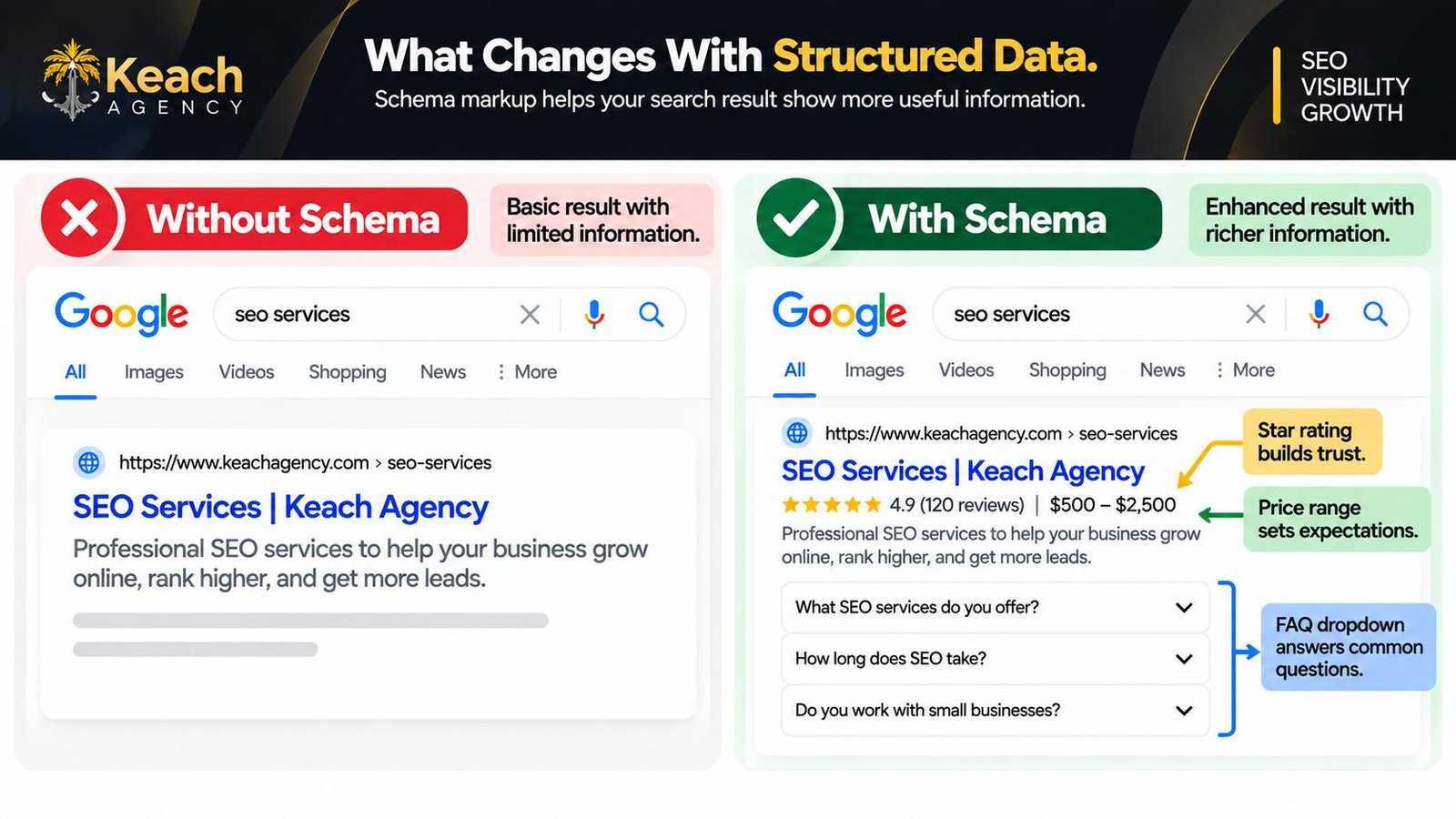
You’ve probably seen the difference without realizing it. Two search results, both for the same kind of page, but one of them shows star ratings, a price, or a small dropdown of questions. The other one is just a blue link with a paragraph underneath. Same ranking position, very different amount of space. That difference comes down to schema markup.
It’s one of those technical details that sounds complicated until you understand what it actually does. And once you understand it, you start noticing it everywhere, because most of the sites that look polished in search results are using it, and most of the ones that look plain aren’t. Getting it right usually falls to experienced on-page SEO services teams, since the implementation is where most sites go wrong.
Schema Markup Is Code That Labels Your Content for Search Engines
Schema markup is a small piece of code added to a webpage that tells search engines what kind of information is on the page. Not just the words, but what those words mean. A price on a product page isn’t just a number. It’s the price of a product. A review isn’t just text. It’s a review with a rating attached to it.
Without schema, search engines have to infer all of that from context. With schema, they’re told directly. That clarity changes what they can do with the page, and it changes how the page appears to the person searching.
The format most sites use is called JSON-LD, and it sits in the page’s HTML without affecting what visitors see. It’s invisible to anyone browsing the page, which is why so many site owners don’t realize they’re missing it.
Not Sure if Your Pages Are Telling Search Engines the Whole Story?
Keach Digital Agency audits structured data across your site.
Star Ratings, Prices, and FAQ Dropdowns Come From Structured Data
The clearest benefit shows up in the search results themselves. Pages with proper markup can display rich results, which include extra information alongside the standard title and description. Star ratings on products. Cooking times on recipes. FAQ dropdowns. Event dates. Pricing details.
Those extras take up more space on the results page, which means your listing gets more visual attention than a plain one. More attention tends to mean more clicks, even at the same ranking position. That’s the direct, measurable part of schema markup benefits, and it’s why most SEO teams treat it as a priority rather than an optional extra.
There’s a second benefit that’s harder to measure but just as real. Structured data helps search engines understand relationships between things. Which product belongs to which brand. Which article was written by which author. Which location offers which service. That understanding makes it easier for search engines to show the right page for the right query, which helps over time.
And then there’s the newer layer. AI-generated search results and voice assistants both lean heavily on structured data because it’s easier to parse than unstructured text. Pages with clear schema are more likely to get picked up by those systems, which matters more every year.
Without vs. With Schema: The Search Result Difference
Product Pages Need Product Schema, Recipes Need Recipe Schema
Not every page needs the same schema. The type of markup depends on the type of content, and using the wrong kind can cause problems rather than help.
A product page needs product schema with details like price, availability, and reviews. A recipe needs recipe schema with ingredients, cooking time, and nutritional information. A local business needs local business schema with address, hours, and service areas. An article needs article schema with author, publish date, and topic.
There are dozens of schema types, and the list keeps growing. That’s good news in one sense, because almost any page can be described well with the right markup. It’s bad news in another, because figuring out which type applies to a specific page requires some judgment.
The place to start is with the pages that matter most. Product pages and service pages usually benefit the most, because they’re the ones where rich results have the biggest effect on clicks. Blog posts and articles benefit too, especially if the content answers specific questions that could appear in featured snippets.
Getting the type wrong is one of the most common mistakes in schema markup implementation. Using product schema on a service page, or review schema on a page where the reviews aren’t actually visible to users, tends to get flagged rather than rewarded. That’s the kind of error a seasoned on-page SEO services team catches quickly, because they’ve seen it before and know how search engines respond.
Structured Data Only Works When It Matches What’s Actually on the Page
Structured data SEO isn’t about tricking search engines into showing things that aren’t on the page. It’s about making the existing content legible in a format search engines can process quickly.
Google publishes a validator that checks whether your markup is correct and whether it matches what’s actually on the page. If you mark up a review that doesn’t exist, or claim a rating that isn’t real, the markup gets ignored or penalized. The rules exist to keep the system honest, and following them is what makes the approach work long term.
When everything is set up correctly, the results show up in a few places. Rich results in search. Better matching between pages and queries. More accurate inclusion in AI answers. Higher click-through rates on listings that display extra information. None of it is instant, but all of it compounds over time.
Three Mistakes That Make Schema Useless
The most common mistake is marking up content that isn’t on the page. Star ratings that don’t actually appear anywhere. Prices that don’t match what’s shown. Authors who don’t exist. Search engines catch this, and the markup gets disregarded.
The second most common is using the wrong schema type for the content. A blog post with product schema, a service page with event schema, or a review page with article schema. The markup might validate technically, but it won’t produce the rich result you’re hoping for.
And then there’s the issue of stale markup. Schema that was correct two years ago may no longer reflect the page. Prices change. Authors move on. Products get discontinued. Regular audits catch these problems before they affect how pages appear in search.
Rich Results Are the Visible Payoff, But Not the Only One
Rich results are the visible outcome of good markup, but they’re not the only thing that matters. Pages with clean structured data tend to rank more consistently because search engines understand them better. They also tend to perform better in AI-generated search results, which are becoming a larger share of how people find information.
That last point is where the real long-term value sits. As search shifts toward AI summaries and voice answers, structured data becomes the difference between getting included and getting skipped. Pages that clearly state what they contain are easier to trust and easier to surface.
Conclusion: Small Code, Real Impact
Schema markup doesn’t show up in rankings directly, but it changes everything around them. It changes how your pages appear, how much space they take up, and how confidently search engines can describe them to someone searching. That’s a meaningful difference, and it’s fixable in a way that most SEO problems aren’t.
Keach Digital Agency treats structured data as part of a broader approach to on-page work, because the payoff only shows up when everything else is in place. The on-page SEO services here cover schema implementation alongside titles, headings, and content, because search engines need the whole picture to reward a page properly. Whether you’re starting from scratch or fixing markup that never worked, the goal stays the same. Pages that are easy to understand and easy to choose.
Ready to Show Up Differently in Search?
Keach Digital Agency handles schema from audit to implementation.
FAQs
Is schema markup good for rankings?
No, not directly. While it does not increase your ranking on its own, it helps pages to be presented in a new light and can even enhance click-through rate. Over time, this might help with increasing engagement, which could eventually lead to improved ranking position.
Which one is easier to implement?
FAQ schema markup would definitely be the easiest option to try out, with article schema being the second. They are both quite easy and useful for pages containing the said content.
Can I do the markup on my own?
Yes, if you feel confident enough when it comes to changing the code or working with plugins. Almost every CMS provides a plug-in to cover the basic schema needs. Other cases will require developer’s or SEO expert’s help.
Is there any penalty for incorrect markup?
In most cases, the search engine will simply ignore the incorrect schema. But repeatedly misleading schema or violating their guidelines might lead to penalties, although this is very rare situation.
When is a schema review needed?
Once a year for most websites, but when content changes, it’s important to do a schema review. Content on prices, reviews, and product information changes frequently.