

In the world of online stores, loads of products are fighting for attention. Your product pages can’t just exist; they need to be set up to get seen, stand out, and make sales. Good e-commerce SEO is more than just using keywords. It’s a mix of making things easy for shoppers, good content, tech fixes, and understanding what people are looking for.
If you want your products to rank higher, get the right people clicking, and boost sales, this guide will show you what to focus on.
Want to get your product pages in shape?
Get suggestions picked just for your store.
1. Figuring Out What People Want When They Search
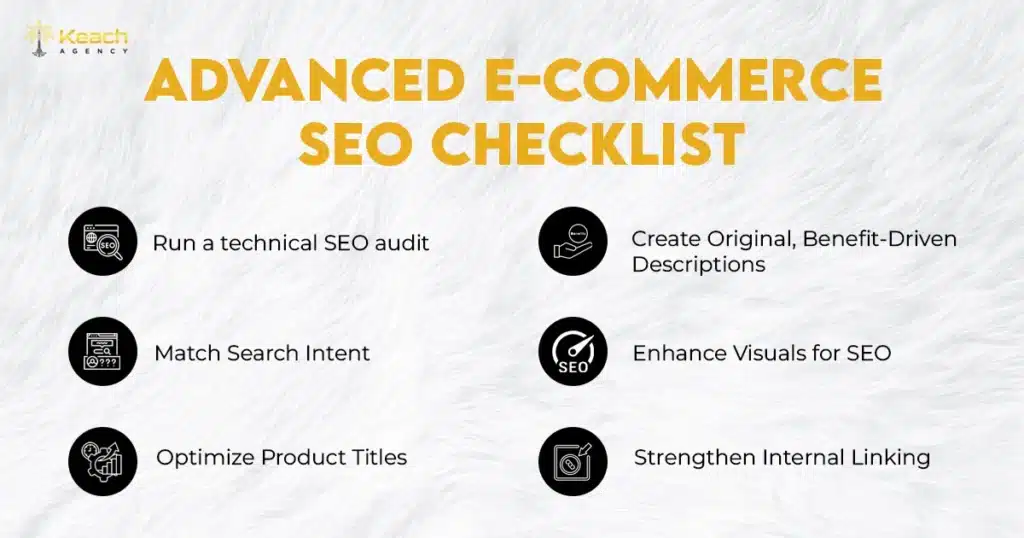
Not everyone who visits your site is ready to buy. Some are comparing items, and others are just looking around. Search engines watch what people do, so your product page needs to match what they expect when they land there.
Here are the main types of search intent:
- Ready to buy > “Buy running shoes online.”
- Doing research > “Best running shoes for beginners.”
- Looking for information > “How to pick the right running shoes.”
Instead of just using the product name, add details that will about comparison shoppers and informed buyers.
2. Writing Product Titles That Actually Get Ranked
A product title isn’t just a name. It helps with ranking.
A decent product title includes:
- Brand name.
- Main keywords.
- Product type.
- Important details (size, color, version, model number).
Example:
“Nike Air Zoom Pegasus 40, Men’s Road Running Shoes (Blue).” Clear titles help search engines, and shoppers know exactly what you’re selling.
3. Product Descriptions That Go Beyond the Basics
A lot of online stores reuse the descriptions from the manufacturer, and that’s a bad SEO move because search engines see copied content as low quality.
A good description should:
Tell a story that focuses on benefits:
Instead of “Lightweight fabric,” try “A lightweight build that keeps you comfy on long runs.”
Be easy to scan:
- Use bullet points.
- Keep paragraphs short.
- Callout Unique Selling Propositions.
Work in keywords naturally
Don’t stuff keywords, just be clear.
Deal with concerns
Mention shipping, how long it lasts, fit, compatibility, and warranty before the user leaves.
The goal is simple: Help users feel good about buying without leaving your page.
4. Pictures and Videos That Search Engines Love
Search engines are getting better at scanning what they see.
Some best tips:
- Use high-quality pictures that are compressed to be small.
- Add alt text (what the image is about).
- Include product videos to help sales and determine how long people stay on your page.
- Show different angles, lifestyle photos, and size information.
Visuals can build trust, and trust makes sales.
Need a full SEO checkup for your online shop?
We can give you a breakdown for each category and product page.
5. Linking Things Together to Help People See Your Products
Internal links help search engines find your product pages faster.
Examples:
- Link the category page and product pages.
- Link related products with each other.
- Add sections like “You might also like” or “People often buy together.”
- Link to sizing guides, blog posts, and FAQs.
Good links lower bounce rates and make it easier for people to find what they need.
6. The Technical Stuff That Makes E-Commerce Work
Technical SEO makes sure your product pages are fast, easy to crawl, and user-friendly.
Focus on:
Making pages load fast
Compress pictures, get rid of heavy scripts, and use lazy loading.
Schema markup
Product schema, price, and ratings, which help search engines to show rich snippets.
Mobile-friendly design
Most people use phones to shop online, so your pages need to be fast, easy to read, and easy to tap.
Good URL structures
Clear URLs with keywords help users and crawlers know what your page is about.
Handling options
Use canonical tags to avoid copied content.
If your technical SEO is good, your rankings will be steady.
7. Getting People to Trust You with Reviews
Search engines trust pages that customers trust.
Add:
- Real customer reviews.
- Ratings.
- Photos from users.
- Q&A sections.
These things show that you are legit, helpful, and have people use your site, which search engines like.
8. A Layout That Turns Visitors Into Customers
Ranking high is great, but getting visitors to buy is what really matters.
A product page that’s good for sales should have:
- Clear prices.
- Big add to cart buttons.
- Easy ways to pick what they want.
- Clear information about shipping and returns.
- Trust badges.
- Recently viewed products.
Small adjustments can really boost your sales.
Starting a new online store?
We can help you set it up for SEO from the start.
FAQs
How long does it take for product pages to rank?
It can take from a few weeks to a few months, based on how heavy competition is, how good the content is, and how authoritative your site is.
Do product descriptions matter for SEO?
Yes, Original, good descriptions are a ranking factor for product pages.
Should I set up every product option separately?
Not always. Options should have canonical tags unless they target different searches.
What is product schema, and why is it vital?
Product schema helps search engines understand your page and show details like ratings and price.
Can internal linking help product page rankings?
Yes. It helps with crawlability, passes authority, and helps users find related items.