
There’s a quiet moment most marketers recognize.
Your emails are going out on time. The design looks fine. Nothing is technically wrong. Yet something feels flat. Opens are steady but not exciting. Clicks come in, but not with the momentum you hoped for.
You start wondering if this is just how inboxes work now, or if your audience has slowly tuned you out.
That’s usually when curiosity kicks in.
You sign up for a few competitor newsletters. You skim their emails in between tasks.
At first, you’re not even sure what you’re looking for. You just want to understand what’s happening around you. This is where competitors’ email marketing stops being a threat and starts becoming a source of clarity.
Struggling to improve emails without sounding like everyone else?
Keach Agency helps brands read the landscape and stay original.
Why Competitors’ Emails Reveal More Than You Expect
Email is one of the most honest marketing channels. There’s no algorithm for guessing intent. When a brand sends an email, it’s deliberate. That’s why email marketing competitor analysis can be so revealing when done calmly.
Over time, you start noticing patterns.
- Some brands send emails constantly, almost nervously.
- Others wait and speak only when they have something meaningful to say.
- Some rely heavily on promotions.
- Others build trust first.
Tracking competitors’ email campaigns this way gives you perspective. It shows you what your audience is already exposed to and what they may be growing tired of. More importantly, it helps you avoid becoming background noise.
This kind of awareness strengthens email marketing strategies because decisions stop being random. They become informed.
What You Should Observe Instead of Copying
The biggest mistake people make when analyzing competitors’ email marketing is focusing on surface details. Subject lines, emojis, layouts. These are easy to copy and rarely effective long-term.
What matters more is intent.
- Why was this email sent today?
- What stage of the customer journey does it speak to?
- Is the tone relaxed or urgent? Confident or defensive?
These subtle cues reveal far more than wording ever could.
When you track competitors’ email campaigns with curiosity instead of comparison, insights come naturally. You begin to see where brands rush, where they hold back, and where opportunities quietly exist. Understanding the common mistakes that kill email engagement helps you spot these patterns even faster.
A Practical Way to Track Competitors’ Email Campaigns
You don’t need complicated tools or dashboards. You need consistency and attention.
Many marketers keep a simple log to note what stands out over time:
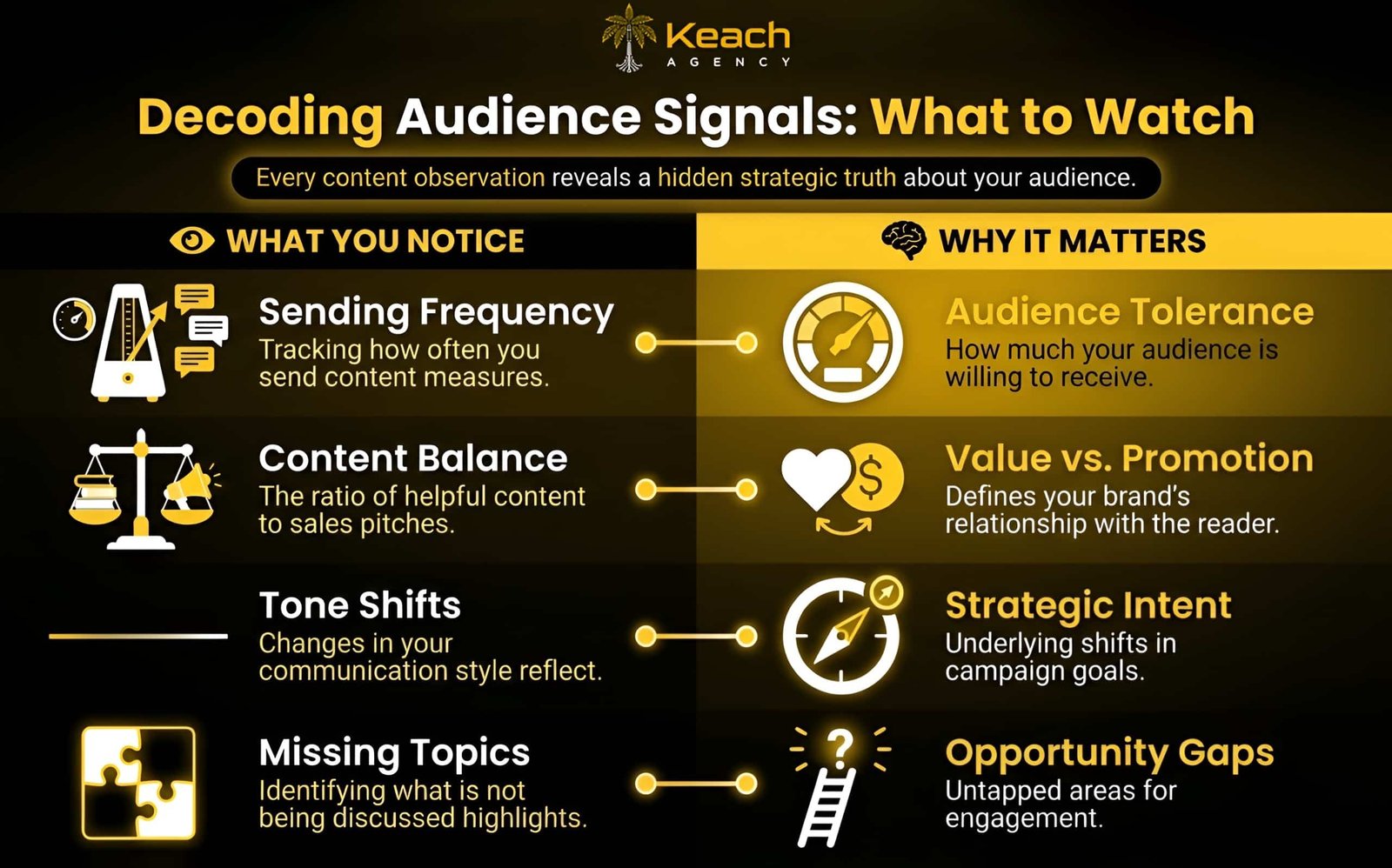
This approach keeps email marketing competitor analysis grounded. You’re not copying ideas. You’re understanding behavior.
Unsure how to translate insights into real campaigns?
We help turn observation into confident execution.
Turning Competitor Insight Into Better Email Marketing Strategies
Observation only matters if it shapes action.
Once you’ve tracked competitors’ email marketing for a few weeks, patterns settle in. You start noticing what feels repetitive in your inbox and what feels refreshing. This is where strategy takes shape.
Maybe everyone in your niche pushes sales weekly. That doesn’t mean you should. Maybe most brands avoid education entirely. That could be your opening. Strong email marketing strategies often come from doing less of what everyone else is doing, not more.
At this stage, competitor analysis becomes freeing. You stop guessing and start choosing.
What Competitors Are Not Saying Matters Most
One of the most valuable parts of competitors’ email marketing is silence.
- Topics no one touches.
- Questions customers keep asking that never get answered.
- Gaps between onboarding and selling where inboxes go quiet.
These blind spots are where trust is built.
When you track competitors’ email campaigns long enough, these gaps become obvious. Filling them does not require copying anyone. It only requires listening. This is how email marketing strategies evolve from reactive to intentional.
Knowing When to Stop Watching and Start Sending
There’s a point where analysis can become avoidance.
Email marketing competitor analysis should support your confidence, not replace it. Once you understand the landscape, trust your instincts. Your audience doesn’t need another recycled email. They need clarity, timing, and honesty.
When you send emails that respect attention instead of chasing it, results follow naturally. Building that kind of authentic connection starts with understanding how to create newsletters that genuinely engage your audience.
Final Thought
The strongest email marketers are not the loudest. They are the most aware. When you understand competitors’ email marketing without chasing it, your own voice becomes clearer. Emails feel intentional again. And your audience can tell.
Want guidance without losing your voice?
Improve emails without blending in.
FAQs
How can I track competitors’ email marketing ethically?
By subscribing to public email lists and observing patterns without copying structure or messaging.
What should I focus on in email marketing competitor analysis?
Timing, intent, frequency, and audience experience matter more than design elements.
How often should I track competitors’ email campaigns?
Ongoing light observation works better than aggressive weekly analysis.
Can tracking competitors really improve email marketing strategies?
Yes. It provides context that sharpens decision-making and positioning.
Is copying competitor emails ever a good idea?
No. Inspiration builds brands. Imitation weakens them.