
If you read enough content lately, a strange thing happens.
Everything makes sense. The grammar is clean. The ideas are organized.
Yet when you close the tab, you can’t remember who said what. It all blends. Not because the content is bad, but because it feels neutral.
That’s the quiet risk of brand voice in the age of AI.
Speed has improved. Output has increased. But personality often gets smoothed out in the process. Brands don’t mean to lose their voice. It just fades a little each time content is rushed, approved quickly, or published without asking whether it still sounds like them.
Feel like your brand sounds fine but forgettable?
Keach Agency helps brands keep their tone intact, along with the use of AI.
Why Brand Voice Feels Different Now
Brand voice has always mattered, but it hits differently now.
- People read faster.
- They decide faster.
- They move on faster.
When everything around them feels automated, they instinctively look for signs of intention. A brand voice that feels grounded and consistent gives that signal immediately.
This is why maintaining an authentic brand voice isn’t about sounding casual or clever. It’s about sounding familiar. When someone reads a line and thinks, “This feels like them,” trust builds without effort. In the age of AI, that familiarity is rare, which makes it valuable.
How AI Slowly Changes the Way Brands Sound?
AI doesn’t strip personality overnight. It does it gradually.
- A sentence here that’s technically correct but emotionally flat.
- A paragraph there that explains instead of connecting.
Over time, content becomes efficient, but distant. It answers questions, but it doesn’t invite conversation.
This is where many brands get stuck. They assume the problem is wording, when it’s actually direction. Crafting a strong brand voice means deciding how your brand thinks, not just how it writes. Without that clarity, automation fills the gaps with safe language. Safe language rarely stands out.
What Crafting a Strong Brand Voice Actually Requires?
A strong digital branding isn’t built in a brainstorming session. It’s built through choices made repeatedly.
- How much context do you give?
- How direct are you willing to be?
- Do you explain patiently or speak confidently?
These decisions show up everywhere, even when you’re not thinking about them.
When crafting a strong brand voice, consistency matters more than creativity. You can evolve tone, but your voice should feel steady. Especially when AI tools are involved, that steadiness becomes an anchor. It tells tools, teams, and audiences what belongs and what doesn’t.
Voice and Tone Are Not the Same Thing
This is where many brands get confused.
Voice is who you are. Tone is how you show up in the moment.
A brand can sound calm during a crisis and energetic during a launch without losing its identity. Maintaining an authentic brand voice means allowing tone to shift while personality stays recognizable.
Understanding this makes AI easier to use. You’re not asking it to invent personality. You’re asking it to express one that already exists. This distinction becomes especially clear when you look at how storytelling shapes the way content connects with real people.
Noticing inconsistency across channels?
Keach Agency helps brands stay recognizable and valid.
A Simple Way Brands Keep Their Voice Grounded
Most teams that protect their brand voice do something very simple. They write it down, clearly.
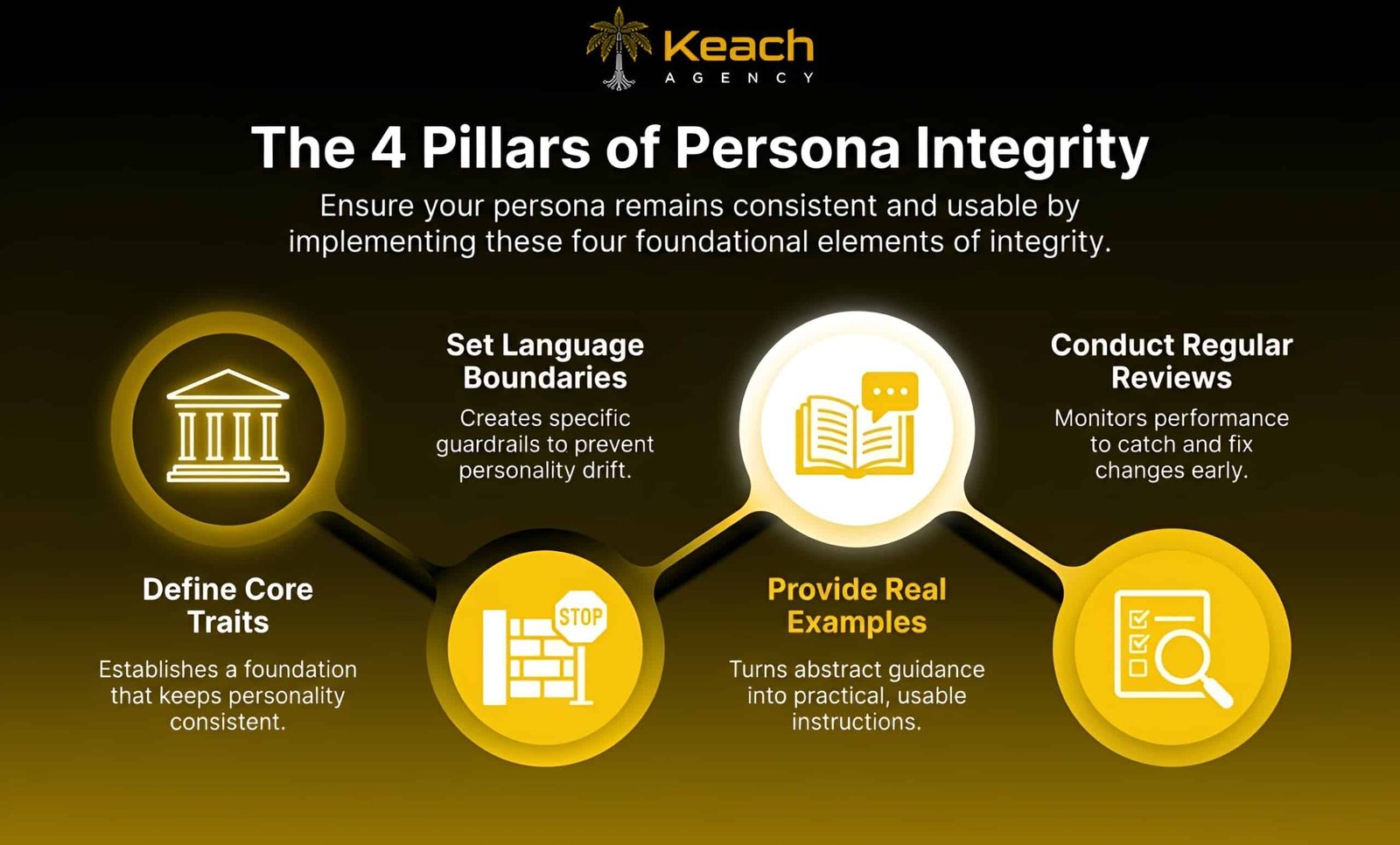
This doesn’t slow teams down. It saves time. Especially when multiple people or tools are involved.
Where Brand Voice Often Breaks First
Brand voice rarely breaks in big campaigns. It breaks in small places.
Support emails. Error messages. Automated replies.
When those moments feel disconnected, people notice, even if they don’t say it out loud.
Maintaining an authentic brand voice means treating every interaction as part of the same conversation. When that happens, trust feels natural. This is also why brand storytelling across every touchpoint matters so much more than most businesses realize.
Using AI Without Losing Yourself
AI works best when it supports thinking, not replaces it.
It’s great in structure. At speed. At filling gaps. But it needs direction. Brands that succeed with AI don’t publish first drafts. They shape them. They read them out loud. They ask, “Would we actually say this?” That habit alone keeps a brand voice in the age of AI, human. Understanding how to use AI tools ethically in content marketing is what separates brands that stay authentic from those that quietly lose themselves.
Why Authenticity Still Wins
People aren’t looking for perfection. They’re looking for intention. For clarity. For something that feels considered. Maintaining an authentic brand voice means choosing honesty over polish when the two conflict. In a space crowded with content, that choice stands out.
Final Thought
AI will keep evolving. Brand voice shouldn’t disappear with it. When your message still sounds like you, people notice. And in a world full of noise, being recognizable is everything.
Want to refine your voice without slowing down?
We help brands stay themselves.
FAQs
What does brand voice in the age of AI really mean?
It means keeping a consistent personality while using automation responsibly.
Why is crafting a strong brand voice harder now?
Because speed often replaces reflection, and reflection is where voice lives.
How can brands maintain an authentic brand voice with AI tools?
By setting clear voice principles and reviewing outputs intentionally.
Can AI help improve brand voice?
Yes, when it’s guided. It supports structure, not identity.
How often should brand voice be revisited?
A few times a year, especially as teams and tools change.